4 posts tagged with "Technical Assignment"

View All Tags

Beyond Writing: Overseeing the Development Process and Providing Ongoing Support


· 15 min read
TokLis Solutions
Software delivery and digital marketing insights

Overseeing software development processes and providing ongoing support

In the fast-paced world of software development, the role of a Project Manager (PM) extends far beyond the creation of technical assignments. This comprehensive guide delves into the multifaceted responsibilities of a PM, encompassing the entire software development lifecycle. From initial planning and execution to post-launch support, the article sheds light on the evolving duties of PMs, highlighting their critical role in bridging communication gaps, navigating various stages of development, and implementing effective project management strategies. It emphasizes the importance of testing for quality assurance, team leadership, and adapting to changing technologies. The guide also explores the balance between technical know-how and managerial skills, underscoring the PM's integral role in leading successful projects in a rapidly evolving tech landscape. This article is a valuable resource for understanding the expansive and dynamic nature of a PM's responsibilities in the realm of software development.

The Project Manager's Expanding Role in Software Development

In the dynamic realm of software development, the role of a project manager (PM) transcends mere technical assignments. As the industry evolves, PMs are finding themselves navigating through multifaceted responsibilities that extend beyond the traditional confines. Initially, their role was predominantly focused on the planning phase, which involved drafting detailed technical assignments and setting the project's foundational path. However, this role has progressively evolved.

The modern PM now acts as a crucial bridge between various stakeholders, ensuring seamless communication and alignment of objectives. This role encompasses not only leading the team through the execution of software development but also involves actively participating in every stage of the project lifecycle. This expansion of duties necessitates PMs to possess a deep understanding of technical aspects, coupled with strong leadership and communication skills.

From Planning to Execution: The PM's Evolving Responsibilities

In software development, a Project Manager's (PM) responsibilities evolve significantly from the planning phase to execution. Initially, they focus on establishing clear objectives, defining the scope, and setting a realistic timeline. As the project progresses, the PM's role shifts towards ensuring that the development adheres to the outlined plan. This involves close collaboration with the team, problem-solving, and adapting to any changes or challenges that arise. Effective PMs skillfully navigate these phases, ensuring a smooth transition from concept to a fully functional software product.

From Planning to Execution

Bridging the Gap: Communication as a Key Tool

Effective communication is a crucial tool for PMs in bridging the gap between various stakeholders in a software development project. They must maintain clear, consistent communication channels with team members, clients, and upper management. This involves not only conveying project goals and updates but also listening to feedback and concerns. By fostering open communication, PMs can ensure alignment of goals, prevent misunderstandings, and build a cohesive, collaborative environment for project success.

The journey through the software development lifecycle is a meticulous process that demands careful oversight. In the initial stages, PMs are deeply involved in requirement gathering and analysis. This crucial phase lays the groundwork for the entire project, where understanding client needs and translating them into actionable technical assignments is key.

As the project progresses to the design and development phase, the PM's role shifts to guiding the creative process. Here, they ensure that the development team's efforts align with the project's goals and technical requirements. The PM also plays a pivotal role in the testing and deployment phases. They oversee the quality assurance processes, ensuring that the software meets the established standards and functions as intended post-launch.

The Initial Stages: Requirement Gathering and Analysis

The initial stages of the software development lifecycle are critical, with a strong emphasis on requirement gathering and analysis. During this phase, PMs work closely with stakeholders to clearly define and document project requirements. This process involves understanding the client's needs, the end-users' perspectives, and the technical feasibility of those requirements. Proper analysis at this stage sets a solid foundation for the entire project, minimizing risks of scope creep and ensuring that the end product aligns with client expectations.

Design and Development: Guiding the Creative Process

During the design and development phase, PMs play a pivotal role in guiding the creative process. They must ensure that the software design aligns with the project requirements and client expectations. This phase involves coordinating with designers, developers, and other team members to translate the project requirements into a tangible product. PMs also need to manage resources effectively, monitor progress, and make necessary adjustments to keep the project on track and within budget.

Testing and Deployment: Ensuring Quality and Efficiency

Testing and deployment are critical stages where PMs ensure the software's quality and efficiency. They oversee various testing methods to identify and rectify any bugs or issues. This process is crucial for guaranteeing that the software meets quality standards and functions as intended. During deployment, PMs coordinate the launch, ensuring that the transition to the live environment is smooth and that the end-users can seamlessly adapt to the new software.

Effective Strategies for Project Management

In managing software development projects, selecting the right project management methodology is vital. Agile and Waterfall methodologies offer different approaches, and PMs must choose the one that best fits the project's nature and requirements. Agile, with its flexibility and iterative nature, is often preferred for projects requiring adaptability and frequent updates. In contrast, Waterfall is suitable for projects with well-defined stages and linear progressions.

Risk management and contingency planning are other critical aspects of effective project management. PMs must anticipate potential challenges and devise strategies to mitigate them. Additionally, leveraging project management tools can streamline operations, ensuring efficient workflow and resource management throughout the project lifecycle.

Agile vs. Waterfall: Choosing the Right Methodology

Choosing the right project management methodology, be it Agile or Waterfall, is crucial in the context of software development. Agile methodologies offer flexibility and are iterative, allowing for regular adjustments based on client feedback and changing requirements. Waterfall, on the other hand, is a sequential approach, where each phase must be completed before the next begins, offering a more structured and linear path. The PM must evaluate the project's nature, client requirements, and team dynamics to determine the most suitable approach for successful project execution.

Risk Management and Contingency Planning in Projects

Risk management and contingency planning are critical components of effective project management. PMs must identify potential risks early in the project lifecycle and develop strategies to mitigate them. This includes analyzing the probability and impact of risks and setting up response plans. Effective contingency planning ensures that the project stays on track despite unforeseen challenges, minimizing disruptions and ensuring timely delivery.

Utilizing Project Management Tools for Streamlined Operations

Utilizing the right project management tools is essential for streamlining operations and enhancing team productivity. These tools help in task scheduling, resource allocation, tracking progress, and facilitating communication among team members. Whether it’s for Agile methodologies like Scrum and Kanban or for traditional project management approaches, selecting appropriate tools can significantly improve efficiency and project outcomes.

The Crucial Role of Testing in Software Development

Testing is an integral component of software development, ensuring the end product's quality and functionality. PMs must oversee various testing types, from unit to integration and system testing, to ensure comprehensive quality checks. Each testing type addresses different aspects of the software, identifying potential issues that need resolution before the final deployment.

Another emerging trend in software testing is the automation of tests. Automated testing, especially in continuous integration environments, offers several advantages. It increases the efficiency of the testing process, allows for frequent and consistent test execution, and significantly reduces the time and cost associated with manual testing.

Test Software

Types of Testing: Ensuring Comprehensive Quality Checks

In software development, implementing comprehensive quality checks through various types of testing is vital. This includes unit testing, integration testing, system testing, and user acceptance testing. Each type addresses different aspects of the software, from individual components to the entire system and its integration with other systems. Effective testing ensures that the software is robust, functional, and meets the user requirements.

Automating Tests: The Advantages of Continuous Integration

Automating tests and implementing continuous integration brings significant advantages to the software development process. It allows for the early detection of defects, reduces manual testing efforts, and ensures the quality of the code throughout development. Automated tests run as part of the continuous integration process can rapidly provide feedback on the impact of recent changes, thereby enhancing the efficiency and reliability of the software development lifecycle.

Post-Launch Support and Maintenance

Post-launch, the focus of a PM shifts to support and maintenance, ensuring the ongoing health and performance of the software. This stage is crucial as it involves monitoring the software for any issues that might arise and implementing necessary updates and fixes.

Another critical aspect post-launch is implementing user feedback. PMs must ensure a continuous improvement cycle, where feedback from users is taken constructively, and necessary changes are made to enhance the software's functionality and user experience. This process not only helps in keeping the software up-to-date but also ensures that it continuously evolves to meet user expectations and market trends.

Monitoring and Maintenance: Keeping the Software Healthy

Post-launch, monitoring and maintenance become crucial to ensuring the longevity and performance of the software. This phase involves regular check-ups for potential bugs, performance issues, and security vulnerabilities. The PM oversees these activities, ensuring that the software remains up-to-date with the latest technological advancements and user requirements. Effective monitoring can preemptively identify issues before they escalate, maintaining the software's health and usability.

Implementing User Feedback: The Cycle of Continuous Improvement

Implementing user feedback is a continuous cycle vital for the software's evolution and improvement. Feedback from end-users offers invaluable insights into user experience and functionality issues. The PM plays a pivotal role in integrating this feedback into the development cycle, ensuring that the software evolves in line with user expectations and market trends, thereby enhancing user satisfaction and product value.

Building and Leading a Successful Development Team

Constructing and managing a successful development team is a multifaceted challenge for any project manager. The composition and dynamics of the team are crucial; finding the right mix of skills, experience, and personalities can significantly impact the project's success. The PM must carefully select team members, considering not only their technical abilities but also how they fit into the team's culture and work dynamics.

Once the team is assembled, the next challenge is leadership and motivation. A PM must keep the team engaged and productive, fostering an environment that encourages innovation and collaboration. This involves setting clear goals, providing ongoing feedback, and recognizing achievements. A motivated team is more likely to meet project objectives and overcome challenges efficiently.

Team Composition and Dynamics: Finding the Right Mix

A successful development team is not just about individual skills but also about the right composition and dynamics. The PM is responsible for assembling a team with diverse skills and expertise that complement each other. Understanding team members' strengths, weaknesses, and communication styles is crucial for fostering a collaborative and productive environment. The right team composition is integral to the project’s success, driving innovation and efficient problem-solving.

Leadership and Motivation: Keeping the Team Engaged and Productive

Effective leadership and motivation are key to keeping the development team engaged and productive. A PM must not only manage tasks but also inspire and motivate the team. This involves setting clear goals, providing regular feedback, recognizing achievements, and creating a positive work environment. Motivated teams are more likely to be creative, proactive, and committed to the project's success.

Balancing Technical and Managerial Duties

A critical aspect of project management in software development is balancing technical and managerial duties. The technical PM must decide how much coding knowledge is essential for effective project oversight. While deep technical expertise can be beneficial, it is also crucial for PMs to focus on broader project management responsibilities.

Time management and prioritization are vital skills in this balancing act. A PM must effectively allocate time between managing the team, liaising with stakeholders, and staying updated with technical advancements. This balance ensures that the PM can provide adequate support to the team while also steering the project towards its strategic objectives.

The Technical PM: How Much Coding Should a PM Know?

One of the enduring debates in project management circles is the extent of coding knowledge required for a technical PM. While it's beneficial for PMs to have a foundational understanding of coding and software development principles, their primary role is to manage the project, not to write code.

Having coding knowledge can help PMs communicate more effectively with their development teams and understand the challenges involved in software creation. However, it is also crucial for PMs to focus on broader project management aspects, such as resource allocation, timeline management, and stakeholder communication. Balancing technical understanding with managerial skills is key to effective project management in software development.

Time Management and Prioritization in Project Management

Effective time management and prioritization are essential skills for project managers in the software development industry. PMs are often required to juggle multiple tasks and responsibilities, making it crucial to prioritize activities based on project goals and deadlines.

Good time management involves setting realistic deadlines, delegating tasks appropriately, and ensuring that the team stays on track. PMs must also be adept at adjusting their plans and priorities in response to project changes or unforeseen challenges, ensuring that critical project milestones are met without compromising on quality or scope.

The landscape of project management is continuously evolving, influenced by emerging technologies and methodologies. PMs must stay ahead of these trends to adapt their strategies and maintain the relevance of their projects. This involves understanding and integrating new technologies and methodologies that can enhance project outcomes.

The role of the PM in this rapidly changing tech landscape is more critical than ever. They must not only adapt to these changes but also guide their teams through them. This role requires a continuous learning mindset and the ability to anticipate and prepare for future challenges in the industry.

Staying Ahead: Adapting to New Technologies and Methodologies

For project managers, staying ahead in the software development industry means being adaptive to new technologies and methodologies. This could involve exploring and integrating advanced technologies like artificial intelligence, machine learning, and cloud computing into the development process.

Adapting to new methodologies, such as Agile, Scrum, or DevOps, can also enhance project efficiency and effectiveness. PMs should continuously explore these advancements, understanding their implications and potential benefits for their projects. By staying informed and flexible, PMs can ensure that their projects remain cutting-edge and aligned with industry best practices.

The PM's Role in a Rapidly Changing Tech Landscape

In the rapidly evolving tech landscape, a PM's role is more dynamic than ever. They must stay abreast of emerging technologies, methodologies, and industry trends. This knowledge enables PMs to guide their teams effectively, adapt to new challenges, and make informed decisions. Staying current with technological advancements ensures that the project remains relevant and competitive in a constantly changing environment.

Conclusion: The Integral Role of a Project Manager

In conclusion, the role of a project manager in software development is integral and multifaceted. From the initial planning stages to post-launch support, a PM's responsibilities encompass a wide range of activities. These include overseeing technical assignments, managing team dynamics, and adapting to evolving industry trends.

The future of project management demands continuous learning and adaptation. PMs must stay informed and flexible to navigate the challenges and opportunities presented by the ever-changing tech landscape. By doing so, they can ensure the successful delivery of software projects and contribute significantly to their organization's growth and innovation.

Summary of Key Responsibilities and Challenges

The role of a project manager in software development is characterized by a diverse set of responsibilities and challenges. Key responsibilities include overseeing the entire project lifecycle, from conceptualization and planning to execution and delivery. PMs must ensure that technical assignments are accurately defined and aligned with project goals. They face challenges such as managing team dynamics, ensuring project alignment with client expectations, and adapting to unforeseen issues during development.

In addition to these responsibilities, PMs also play a critical role in post-launch activities. This includes monitoring software performance, addressing any issues, and incorporating user feedback for continuous improvement. Navigating these responsibilities and challenges requires a PM to be adaptable, proactive, and equipped with both technical and managerial expertise.

Preparing for the Future: Continuous Learning and Adaptation

For project managers, preparing for the future is about embracing continuous learning and adaptation. The rapidly evolving technology landscape demands that PMs stay abreast of the latest trends and methodologies in software development. This continuous learning approach is vital for adapting to new technologies, such as AI or cloud computing, which can significantly impact project management processes and outcomes.

Adaptation also involves being receptive to new project management methodologies and tools that enhance efficiency and collaboration. As the role of PMs continues to evolve, those who proactively seek knowledge and adapt to changes will be best positioned to lead successful projects in the dynamic world of software development.

Additionally, think about delegating your assignment writing to experts for enhanced project success and efficiency. Toklis Solutions provides specialized services to meet your requirements, guaranteeing accurate and goal-aligned technical assignments.
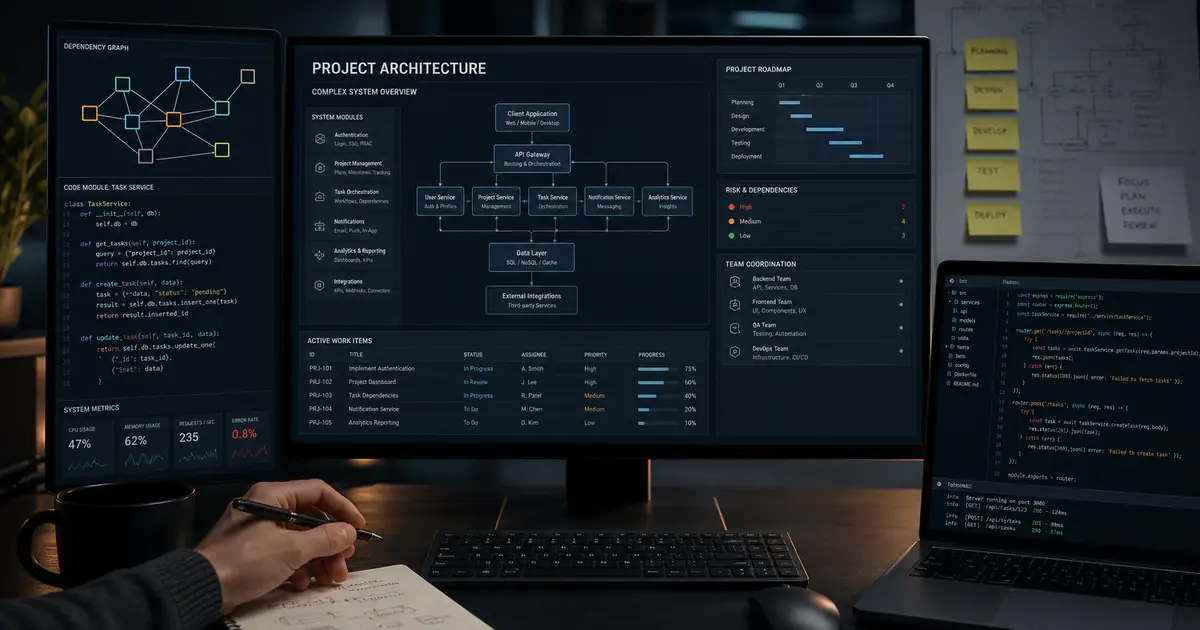

Managing Complex Projects: Advanced Strategies for Developing Technical Assignments

· 11 min read
TokLis Solutions
Software delivery and digital marketing insights

Managing complex projects with advanced technical assignment strategies

In the realm of software development, the nature and complexity of projects have undergone a rapid evolution. This evolution has brought about an increased emphasis on the nuances of "Technical Assignments." A technical assignment, at its core, serves as a blueprint for developers, guiding them through the labyrinth of intricate software components, features, and integrations. This article delves deep into the heart of managing these assignments, emphasizing the importance of granularity and precision.

The Evolving Nature of Complex Projects

The digital age has ushered in projects that are not only vast in scope but also intricate in their demands. From creating user-centric applications to implementing intelligent algorithms, the software development landscape has transformed. As projects grow in complexity, so does the need for detailed and structured technical assignments. These assignments provide a roadmap, ensuring every team member understands their role, responsibilities, and the larger objective. With the correct blueprint in place, teams can navigate the multifaceted nature of modern projects, aligning their efforts for optimal results.

Understanding the Significance of Detailed Technical Assignments

Delving into the realm of software development, the pivotal role of technical assignments cannot be understated. By offering a structured approach, these assignments provide clarity amidst chaos. Moreover, they serve as a bridge, ensuring seamless communication between stakeholders, designers, developers, and testers. A comprehensive technical assignment sheds light on the expected outcomes, potential challenges, and the methodologies to be employed, thereby setting the stage for project success. In essence, it's the beacon that guides a project through stormy waters, ensuring its safe arrival at the desired destination.

Foundations of Effective Technical Assignments

Technical assignments play a critical role in charting the course of a project. At their best, they are comprehensive, concise, and clear, fostering understanding and ensuring everyone remains on the same page.

Recognizing the Elements of a Comprehensive Technical Assignment

In the expansive realm of software development, the makings of a robust technical assignment reside in its details. Several core elements define the quality and effectiveness of such assignments:

Clear Objectives and Desired Outcomes

At the onset of any project, it's crucial to elucidate its primary objectives and the desired outcomes. A well-framed technical assignment, therefore, begins with a clear statement of what needs to be achieved. This clarity not only provides direction but also facilitates measurement, ensuring teams can gauge progress and adjust their strategies accordingly.

Defined Scope and Boundaries

While ambition is a driving force behind innovation, it's imperative for projects to operate within defined parameters. A comprehensive technical assignment outlines the scope of a project, detailing the features, functionalities, and integrations required. Equally vital is the delineation of boundaries, ensuring that teams are aware of what lies outside the project's purview, thus preventing overextension and resource depletion.

Stakeholder and Team Member Roles

A project's success often hinges on the collaborative efforts of its team members. A well-structured technical assignment elucidates the roles of each stakeholder, from developers and designers to testers and project managers. By offering clarity on roles and responsibilities, technical assignments foster collaboration and ensure that each team member contributes effectively to the project's overarching goals.

The Role of Full-stack Development in Modern Projects

The dynamics of software development have evolved, with full-stack development becoming a cornerstone for many enterprises. This approach allows for a holistic understanding of projects, bridging the gap between frontend user experiences and backend data processes.

Full-stack development requires a deep dive into both the visible (frontend) and hidden (backend) parts of an application. The frontend is where users interact, making it essential for it to be intuitive and user-friendly. On the other hand, the backend is the engine room, handling data storage, retrieval, and other core functions. Balancing these two domains is crucial in technical assignments to ensure seamless software functionality.

Importance of Middleware in Bridging Gaps

Middleware acts as the glue that binds frontend and backend processes. It facilitates communication, ensuring data is appropriately passed and transformed. Technical assignments should detail how middleware will be implemented, highlighting its role in ensuring data integrity, security, and smooth communication between the application layers.

Database Considerations: From Schema Design to Optimization

No technical assignment in the realm of software development is complete without addressing database concerns. Whether it's defining the schema, considering normalization, or ensuring optimal query performance, databases are central to application performance. Technical assignments must articulate strategies for database design, indexing, and optimization, ensuring data is easily accessible, and systems remain responsive.

Advanced Strategies for Decomposing Large Tasks

Navigating the waters of complex software development projects requires a strategic approach to decomposing large tasks. This division into smaller, more manageable units aids in clarity, accountability, and tracking, ultimately leading to better project outcomes.

Implementing Work Breakdown Structures (WBS)

software development

The Work Breakdown Structure (WBS) is a tried-and-true method for dissecting a project into bite-sized pieces. This hierarchical decomposition aids in organizing and defining the total scope of the project, ensuring that no element is overlooked.

Hierarchical Decomposition of Tasks

A well-structured WBS organizes tasks in a hierarchical manner, starting with the overarching project goal and branching out into specific deliverables and sub-tasks. This hierarchical approach ensures that each task has a clear parent-child relationship, allowing for a systematic progression and clear lines of responsibility. This structure, when meticulously detailed in technical assignments, offers a roadmap for project teams to follow.

Estimating Effort and Duration for Sub-tasks

Once tasks have been hierarchically decomposed, it becomes vital to estimate the effort required for each. This process, often intertwined with tools like Gantt charts, aids in setting realistic timelines. In technical assignments, clear estimates can mitigate the risk of overruns and ensure that resource allocation is optimized.

Embracing the Agile Mindset

In the fast-paced world of software development, agility is more than a methodology; it's a mindset. Adopting Agile principles in technical assignments can ensure adaptability, continuous improvement, and closer alignment with user needs.

Iterative Development and Feedback Loops

Technical assignments structured around Agile promote iterative development. This approach emphasizes breaking the project into cycles or 'sprints,' with each iteration resulting in a potentially shippable product increment. Coupled with this is the value of feedback loops, where end-user feedback is continually integrated into the development process, ensuring the final product resonates with user expectations.

The Significance of User Stories and Acceptance Criteria

Within the agile paradigm, user stories have emerged as an essential tool for capturing product functionalities from the end-user's perspective. Technical assignments grounded in user stories enable a more user-centered design and development approach. Accompanying these stories, acceptance criteria further delineate the conditions that the software must meet for the user story to be considered complete. By laying out these criteria, technical assignments gain clarity, ensuring that both developers and stakeholders share a unified vision of the expected outcomes.

Documentation: The Unsung Hero of Technical Assignments

Documentation, often overshadowed by the allure of code and design, remains a cornerstone of effective technical assignments in software development. When done right, it serves as a blueprint, guiding teams through the project's intricacies and ensuring that all stakeholders remain aligned.

Best Practices for Structuring Documentation

Effective documentation goes beyond mere record-keeping. It's a strategic endeavor, structured to offer clarity, consistency, and ease of access.

Consistent Formatting and Templating

Consistency is the lifeblood of effective documentation. By employing standardized templates and maintaining uniform formatting across documents, technical assignments become easier to navigate. This consistency aids teams in quickly locating relevant information, thus saving time and reducing potential ambiguities.

Use of Visual Aids: Diagrams, Flowcharts, and Wireframes

Visual aids play a pivotal role in complementing textual content within technical assignments. Diagrams elucidate complex relationships, flowcharts detail process flows, and wireframes offer a glimpse into the user interface's look and feel. These visual elements, when used judiciously within documentation, enhance comprehension and offer a richer perspective on the software's design and functionality.

The Role of Collaboration Tools and Platforms

In today's interconnected work environment, collaboration tools are no longer a luxury but a necessity. They empower teams to work seamlessly, irrespective of geographical boundaries, and ensure that everyone stays on the same page.

Version Control for Document History

In the realm of technical assignments, having a robust system for version control is paramount. With multiple team members accessing and editing documents, the ability to track changes, revert to previous versions, and understand the evolution of a document becomes invaluable. Version control systems, often associated with code, are equally crucial for documentation, ensuring that the most accurate and up-to-date information is always at hand, minimizing errors and oversights.

Real-time Collaboration and Feedback Integration

Modern collaboration tools have paved the way for real-time communication and feedback. Technical assignments benefit immensely from this immediacy, allowing team members to discuss, annotate, and suggest changes directly within the document. This dynamic form of collaboration speeds up the review process, fosters open communication, and results in more refined and accurate technical documents.

Overcoming Common Challenges in Technical Assignment Development

The journey of crafting impeccable technical assignments is often riddled with challenges. From aligning with stakeholder expectations to navigating the ever-present uncertainties in software development projects, teams must be equipped with strategies to surmount these obstacles.

Ensuring Alignment with Stakeholder Expectations

One of the primary challenges in technical assignment development is ensuring that the document aligns perfectly with the expectations of all stakeholders.

Frequent Communication and Check-ins

To bridge any gaps between stakeholder expectations and the technical team's understanding, regular communication is essential. Periodic check-ins, reviews, and feedback sessions allow for real-time adjustments, ensuring that the technical assignment remains relevant and actionable throughout the project's lifespan.

Managing Scope Creep Effectively

In the throes of software development, it's not uncommon for the project's scope to expand or shift — a phenomenon known as scope creep. While some degree of change is inevitable, unchecked scope creep can derail projects. Technical assignments, when used as living documents, can help in identifying and managing these changes. By clearly defining boundaries and continuously updating them in response to changing requirements, teams can maintain focus and avoid overextension.

Handling Uncertainty and Ambiguities in Projects

Software projects, by their very nature, operate in an environment filled with uncertainties. From unexpected technical challenges to evolving client needs, ambiguities are a part and parcel of the domain.

Prioritizing Flexibility Over Rigidity

In the world of technical assignments, a strict, unwavering approach can sometimes be more of a hindrance than a help. Emphasizing flexibility allows teams to adapt to new information, pivot when necessary, and ensure the project’s success. This doesn't mean abandoning structure, but rather building an adaptable framework that can handle the unpredictable nature of software development.

The Importance of Contingency Planning

Contingency planning plays a pivotal role in addressing uncertainties. By anticipating potential roadblocks or challenges, teams can devise backup plans, ensuring that they remain on track even when faced with unforeseen issues. Technical assignments should outline these contingencies, providing clarity on steps to be taken under different scenarios.

Conclusion

The realm of technical assignments, while intricate, is integral to the success of software development projects. As teams navigate the multifaceted landscape of complex project management, these assignments serve as beacons, guiding the way.

The Road Ahead: Continuous Learning and Adaptation

Software development and the strategies surrounding it are continually evolving. Staying updated, embracing new methodologies, and being open to learning are crucial. Technical assignments, too, should be seen as dynamic entities, evolving with the project and the larger industry landscape.

Final Thoughts on Technical Assignment Mastery

Mastering the art and science of technical assignments is not a one-time achievement but a continuous journey. By marrying meticulous attention to detail with a holistic understanding of project goals, teams can craft documents that are not just informative but instrumental in driving project success. Furthermore, if you're looking to optimize your project success and efficiency, consider outsourcing your assignment writing to professionals. Toklis Solutions offers expert services tailored to your needs, ensuring that each technical assignment is not only accurate but also strategically aligned with your goals. By partnering with seasoned professionals, you can leverage their experience and insights, paving the way for smoother project executions and superior outcomes.

Translating Ideas into Code: How to Write Effective Technical Assignment

· 13 min read
TokLis Solutions
Software delivery and digital marketing insights

Writing effective technical assignments that translate ideas into code

In the intricate world of software development, the process of turning a conceptual vision into a tangible solution heavily depends on the quality of Technical Assignments. A well-crafted Technical Assignment serves as the bridge between the idea's originators and the developers who will bring it to life. It ensures that both parties are on the same page, minimizing misinterpretations and maximizing efficiency. This article delves deep into the art and science of creating Technical Assignments that resonate with developers and lead to successful software implementations.

The Critical Nature of Clear Technical Assignments

When embarking on any software development project, the importance of clear communication cannot be overemphasized. It's not just about conveying what needs to be done; it's about ensuring that it's understood, actionable, and aligns with the overarching objectives of the project. Moreover, the fallout from ambiguous or poorly written instructions can have real-world implications, leading to wasted time, resources, and missed opportunities.

The role of effective communication in software development

Effective communication in software development is akin to the foundation of a building. Without it, no matter how grand the architectural plans, the structure is bound to crumble. When project managers, stakeholders, and developers communicate effectively, it promotes a harmonious workflow, reduces the chances of errors, and ensures that the final product aligns with the initial vision. Additionally, when technical assignments are clear, developers can better estimate timeframes, allocate resources, and mitigate potential challenges.

The real-world impact of ambiguous requirements

Ambiguous requirements are a significant pitfall in software development. They lead to multiple interpretations, causing developers to head down unintended paths potentially. Such ambiguity can result in costly reworks, missed deadlines, and a product that doesn’t meet the stakeholder’s vision or the user's needs. Real-world examples abound where software projects went over budget, took longer than expected, or failed entirely due to unclear technical assignments. Ensuring clarity from the outset not only aids developers but also safeguards the project’s success and ROI.

Understanding the Audience: Developers

Developers, with their unique mindset and approach, form the backbone of any software development process. When creating technical assignments, it's crucial to frame them in a way that resonates with a developer's way of thinking. This means translating high-level ideas into specific, actionable tasks while maintaining the clarity and context essential for successful implementation.

The Developer Mindset

Every developer approaches a problem with the intent of crafting a logical and efficient solution. Their mindset revolves around dissecting abstract ideas, understanding the underlying requirements, and then translating them into code. This process necessitates clear, concise, and comprehensive technical documentation. Without it, developers are left to make assumptions, which can lead to discrepancies in the final product.

From abstract to specific: The developer’s approach

Developers thrive on specificity. They dissect broad concepts into tangible tasks, transforming the abstract into code. A vague idea like "improve user experience" becomes multi-faceted in the developer's mind, leading them to ask questions such as: How? Where? For whom? A well-drafted technical assignment anticipates these questions, offering specific directives like "Reduce the checkout process from five steps to three" or "Implement a responsive design for mobile users." By converting broad strokes into detailed actions, we bridge the gap between vision and execution.

Why clarity is paramount for efficient code production

In the realm of software development, ambiguity is a silent project killer. Misunderstandings stemming from unclear directives can translate to hours of wasted effort, leading to project delays and escalating costs. Clarity streamlines the development process. When a developer knows precisely what is expected, they can channel their energy and expertise into producing accurate, efficient code. This clarity reduces the need for back-and-forth communications, repeated revisions, and costly rectifications later in the development cycle.

Bridging the Gap between Concept and Code

Every technical assignment is, at its core, an effort to translate a conceptual idea into a coded reality. This requires more than just a list of demands; it's about providing a roadmap, complete with landmarks and directions. Developers need a clear understanding not just of the "what" but also the "why" and the "how." By grounding technical assignments in this holistic approach, we foster an environment where ideas evolve seamlessly into functional software solutions.

The necessity of detail without over-complication

Detail is the lifeblood of a technical assignment, but there's a delicate balance to strike. Overwhelming developers with excessive detail can be just as detrimental as providing too little. The trick is to present concise, actionable insights that guide without stifling creativity. An effective technical assignment should give developers all the tools they need to understand a task and its significance, without burying them in unnecessary minutiae.

Understanding the tools and languages developers work with

Each programming language, platform, or tool has its nuances. When crafting a technical assignment, it's beneficial to have some understanding of the medium in which the developers work. This familiarity ensures that the instructions provided are feasible and align with the capabilities of the chosen technology. Furthermore, it also paves the way for more efficient problem-solving and troubleshooting, as challenges can be framed within the context of specific tools and languages.

Crafting the Perfect Technical Assignment

An aptly crafted technical assignment mirrors a well-drawn blueprint. It provides direction, showcases the envisioned end goal, and breaks down the journey into actionable steps. The role of such an assignment is twofold: to guide developers through the intricacies of the project and to set clear expectations for stakeholders. To master this delicate art, one must emphasize context, segment requirements effectively, and define clear milestones for progress tracking.

Start software development by writing technical assignment.

Laying the Foundation: Context is Key

Every great structure starts with a strong foundation. Similarly, the foundation of a clear technical assignment lies in establishing the right context. By doing so, it not only helps developers grasp the project's essence but also steers them in the right direction.

Describing the project's overarching goal

Before diving into the technical specifics, it's essential to paint a broader picture. What is the primary objective of this software? What problems does it aim to solve? These high-level details provide developers with a sense of purpose, enabling them to align their code with the project's overarching mission.

Outlining the software's intended users and their needs

Identifying and understanding the target users is paramount. By explicitly stating who the software is for and what needs it aims to address, you provide developers with a clearer sense of direction. This knowledge aids them in making informed decisions during the development phase, ensuring the end product resonates with its intended audience.

Breaking Down Requirements

No matter how grand or intricate a vision might be, it's the meticulous breakdown of requirements that paves the way for its realization in the realm of software development. It's about decomposing complex ideas into manageable chunks, each clearly defined and actionable.

Employing user stories for clearer context

User stories, often phrased from the perspective of an end-user, play an invaluable role in framing requirements. These simple, concise statements encapsulate a specific need or goal. For example, "As a user, I want to be able to reset my password in case I forget it." By employing user stories, you effectively convey not just the 'what', but also the 'why' behind a requirement. This clarity empowers developers to craft solutions that genuinely address the end-users' pain points.

The role of use-case diagrams and flowcharts

Beyond textual descriptions, visual tools can offer developers a more intuitive understanding of requirements. Use-case diagrams illustrate how different entities interact with the system, revealing the system's various functionalities and their interrelationships. Meanwhile, flowcharts provide a step-by-step visual representation of processes, ensuring developers are aligned on the flow and logic. Such visual aids not only cater to different learning styles but also foster a comprehensive grasp of the system's architecture and functionality.

Prioritization and Milestones

Software development is not a linear journey. It's more like navigating a labyrinth, where clear markers guide the way and prevent you from being overwhelmed. Setting priorities and defining milestones are those crucial markers, ensuring that the most critical aspects get addressed first and that there's a systematic progression.

The agile philosophy: breaking tasks into sprints

The agile methodology, adopted by many modern software development teams, emphasizes adaptability and swift responses to change. A cornerstone of this approach is breaking down the development process into smaller, manageable chunks called sprints. By allocating specific tasks to these short, focused periods, developers can concentrate on discrete objectives, ensuring attention to detail and quality. What's more, these regular intervals offer opportunities for reviews, making sure that the product evolves in line with the client's vision and the end-users' needs.

The importance of iterative feedback

Feedback is the lifeblood of a successful development process. Iterative feedback, sought at regular intervals, ensures that potential issues are identified and rectified early on. This approach avoids the costly and time-consuming prospect of overhauling large sections of the project later. When developers can incorporate insights and suggestions promptly, the technical assignment remains a living document, ever-evolving, and refining in response to challenges and discoveries.

Best Practices for Effective Documentation

Comprehensive and clear documentation is more than just a set of instructions. It's a bridge, enabling seamless collaboration between teams with varied expertise. When crafted with precision and care, documentation minimizes confusion, redundancies, and oversights. Let's delve into the practices that elevate the quality of technical assignments in software development.

Using Standardized Templates

In the realm of software development, consistency is a crucial factor that ensures a smooth workflow. When developers encounter familiar formats and structures, they can quickly pinpoint the information they need, fostering efficiency.

The benefits of consistency

Standardized templates for technical assignments offer a sense of familiarity. Like the rhythm of a well-composed song, consistency enables developers to anticipate what comes next, cutting down the time spent searching for specifics. Moreover, it reduces the chances of misinterpretation. With clear sections designated for objectives, prerequisites, expected outcomes, and other details, there's less room for ambiguity.

Adapting templates to project-specific needs

While standardization is vital, every project is unique. Recognizing this, it's essential to adapt templates to cater to project-specific nuances. By tweaking sections or adding tailored subheadings, technical assignments can accurately reflect the distinct challenges and requirements of each venture, ensuring that developers receive a blend of familiar structure and project-specific insight.

Active Collaboration with Developers

The creation of a technical assignment shouldn't be a solitary endeavor. Engaging developers in the process ensures that the documentation aligns with the practical aspects of coding and system design.

The feedback loop: reviews, revisions, and refinements

Regular check-ins with the development team can unearth insights that might otherwise be overlooked. This feedback loop allows for revisions based on real-time challenges encountered by developers, ensuring that the technical assignment remains relevant and actionable. Such dynamic collaboration leads to refinements that benefit both current and future projects.

Keeping Documentation Updated

One constant in the software development world is change. Whether these are changes in user requirements, technological advancements, or unforeseen challenges, it's essential that technical assignments evolve in tandem to maintain relevance.

Addressing the changing nature of project requirements

It's no rarity for a project's requirements to undergo modifications as it progresses. This can be due to a myriad of reasons — from user feedback to real-world testing revealing unexpected issues. Hence, it becomes paramount to continuously update technical assignments to reflect these alterations, ensuring developers always have the most recent and relevant information at their fingertips.

The role of version control in documentation

Just as developers utilize version control systems like Git to manage changes in code, employing such systems for documentation is equally crucial. By maintaining an organized record of revisions, stakeholders can quickly trace back changes, comprehend the evolution of requirements, and ensure they're always working off the latest, approved version of the assignment.

Common Pitfalls and How to Avoid Them

Every process has its set of challenges, and drafting technical assignments is no exception. Being aware of these pitfalls and taking preemptive measures can make all the difference.

Overlooking Non-Functional Requirements

While functional requirements — what the software should do — are often the focal point, non-functional requirements (NFRs), detailing how the software should perform, are just as crucial. These encompass aspects like security, scalability, and responsiveness.

Communicating the 'how' alongside the 'what'

Understanding the importance of NFRs means recognizing that while software functionality is essential, the quality of its performance can make or break the user experience. Hence, a comprehensive technical assignment should communicate not just what the software should achieve but how it should go about achieving it — ensuring robustness, speed, and security.

Failing to Account for Edge Cases

Despite meticulous planning and comprehensive documentation, overlooking the potential outliers or exceptional scenarios, termed as edge cases, is a frequent oversight in software development. These overlooked scenarios, if unaddressed, can result in unexpected behaviors, software crashes, or even security vulnerabilities.

The role of thorough testing in highlighting overlooked scenarios

Testing, especially rigorous ones like boundary value analysis and stress testing, often exposes these edge cases. While the immediate instinct might be to view these revelations negatively, they present a golden opportunity. Identifying these scenarios during testing allows developers to address them proactively, ensuring a more robust and reliable final product.

Employing diverse perspectives to envision potential pitfalls

A singular perspective, no matter how experienced, can often miss certain scenarios. By diversifying the team involved in drafting and reviewing technical assignments – from business analysts and UX designers to QA testers – you harness a broader view, leading to a more comprehensive document that captures a wider range of potential scenarios.

Conclusion

As we reflect on the intricate journey of translating abstract ideas into tangible lines of code, it becomes evident that a well-structured technical assignment is the linchpin holding this process together. Also, you can always get our professional help writing a professional tech. assignment for your business.

The Synergy of Clarity and Collaboration

A successfully implemented piece of software is often the culmination of clear documentation paired with seamless collaboration. While the initial onus lies on crafting a lucid, comprehensive technical assignment, the iterative feedback, and cooperative spirit between stakeholders play an equally pivotal role.

Reflecting on the journey from idea to implemented code

From the initial conception of an idea to its realization as functional software, the road is rife with challenges. Yet, with a comprehensive technical assignment as a guiding light, this path becomes more navigable, minimizing missteps and ensuring a smoother transition from ideation to execution. If you want to outsource tech. Assignment writing, fill out the form.

Aiming for continuous improvement in communication

Like all skills, the art of crafting effective technical assignments can always be refined. By continuously seeking feedback, staying updated with best practices, and always keeping the end goal – clear, efficient software development – in sight, one can consistently elevate the quality and effectiveness of their documentation.

Demystifying Technical Assignment: A Comprehensive Introduction

· 5 min read
TokLis Solutions
Software delivery and digital marketing insights

Technical assignment planning with code, documentation, and requirements

In the vast software development landscape, technical assignments occupy a unique and vital place. Their importance cannot be overstated, nor can their complexity be underestimated. So, continue reading this comprehensive guide to learn what technical assignment is, why it's essential, its various components, and how to craft TA effectively.

Understanding Technical Assignments

Definition and Purpose

Technical assignments are well-structured documents that define the requirements, goals, constraints, and specifications for a software development project. They provide a roadmap and act as a contract between various stakeholders, ensuring everyone is on the same page.

Historical Context

Understanding technical assignments requires a brief look at their history. Originating from engineering and architecture, they've become a critical tool in modern software development. Tracing back the evolution, we can see how they've adapted to new methodologies and technologies.

Importance of Technical Assignments in Software Development

Alignment and Clarity

Technical assignments provide clarity and direction to all involved parties. By defining clear objectives and deliverables, they ensure alignment among developers, designers, managers, and clients.

Risk Management

Identifying and analyzing potential risks early on allows for proactive planning. This risk management process helps in foreseeing challenges and devising strategies to mitigate them.

Efficient Resource Allocation

With a well-defined scope and constraints, the team can allocate resources more efficiently. This includes time, money, manpower, and technology. Moreover, you'll ensure that the project remains on track and within budget.

Facilitates Communication

Technical assignments enable better communication with clients. They provide a reference point for discussions and negotiations, clarifying expectations, and building trust.

Anatomy of a Typical Technical Assignment

Executive Summary

This is a quick overview, providing essential information about the project. It should be concise and easy to understand for a broad audience.

Background Information

The background section gives context to the problem or opportunity the project aims to address. It includes historical data, market analysis, and any previous related work.

Requirements Analysis

A detailed analysis of both functional and non-functional requirements forms the core of the technical assignment. It outlines what the software must do and how it must perform.

Design Specifications

Including architectural diagrams, user interface designs, and technology choices, this section lays out the blueprint for the entire system.

Implementation Plan

A timeline with milestones, deliverables, and deadlines ensures that everyone knows what to expect and when.

Budget and Resource Allocation

This crucial part covers the financial aspects and human resources, providing a clear understanding of where and how the resources will be utilized.

Conclusion and Recommendations

Summing up the key points and providing actionable recommendations is essential in the conclusion section.

Types of Technical Assignments

Project-Based Technical Assignments

These are specific to a particular project and cover all aspects related to it. They are comprehensive and often include detailed timelines and deliverables.

Product-Based Technical Assignments

These focus on a particular product or feature within a larger system. They detail the requirements, specifications, and design considerations for that specific component.

Research-Based Technical Assignments

These documents outline the approach and methodology for research and development projects. They often include literature reviews, experimental designs, and expected outcomes.

Crafting Technical Assignments: A Step-by-Step Guide

Step 1: Understanding the Project

Grasping the project's overall goals, audience, and context is the starting point for writing a technical assignment.

Step 2: Gathering Requirements

Engaging with stakeholders to collect both functional and non-functional requirements is vital at this stage.

Step 3: Analyzing Risks

Identifying potential risks and devising strategies to address them helps in laying a solid foundation.

Step 4: Designing the System

Creating architectural diagrams and user interface designs will guide the development team throughout the project.

Step 5: Planning Implementation

Setting clear milestones and deadlines ensures that the project progresses smoothly.

Step 6: Allocating Resources

Defining the budget and human resource needs ensures that the project remains within its constraints.

Step 7: Reviewing and Revising

A continuous review process, involving all stakeholders, ensures the technical assignment remains relevant and accurate.

Best Practices in Writing a Technical Assignment

Clarity and Precision

Avoiding ambiguity and being specific in descriptions is vital. Clear language aids in understanding and reduces confusion.

Collaboration with Stakeholders

Regular engagement with developers, clients, and other team members enriches the content.

Continuous Revision

Keeping the technical assignment up to date ensures that it continues to guide the project effectively.

Use of Visual Aids

Diagrams, charts, and tables can simplify complex ideas and provide a visual representation that aids understanding.

Common Challenges and Solutions

Challenge: Ambiguity in Requirements

Solution: Detailed interviews and workshops with stakeholders can clarify ambiguous requirements.

Challenge: Scope Creep

Solution: Clearly defining the scope and regularly reviewing it prevents the project from growing beyond its original goals.

Challenge: Communication Breakdown

Solution: Regular updates and meetings facilitate communication and keep everyone informed.

Case Studies: Real-Life Examples

Case Study 1: Successful Project Alignment

A detailed look at how a well-crafted technical assignment ensured alignment and success in a large-scale software development project.

Case Study 2: Mitigating Risks

An analysis of a project that utilized a robust risk management process within its technical assignment to overcome significant challenges.

Case Study 3: Efficient Resource Allocation

An exploration of how precise resource planning within a technical assignment led to successfully completing a project under tight constraints.

Conclusion

Technical assignments are essential tools in software development. They guide projects, align stakeholders, mitigate risks, and ensure efficient resource utilization. Understanding their structure, importance, types, and best practices empowers you to craft practical technical assignments.

We have demystified this critical aspect of project planning through real-world case studies and step-by-step guides. Whether you're a veteran in the software industry or taking your first steps, these insights will equip you with the tools to create well-defined, well-executed, and well-received projects. Alternatively, you can hire professionals to write a Technical Assignment for your application.